
Exhibit of the month June 2022
Portrait of a little girl
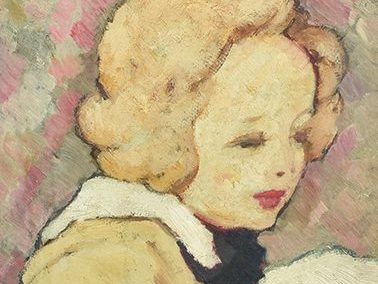
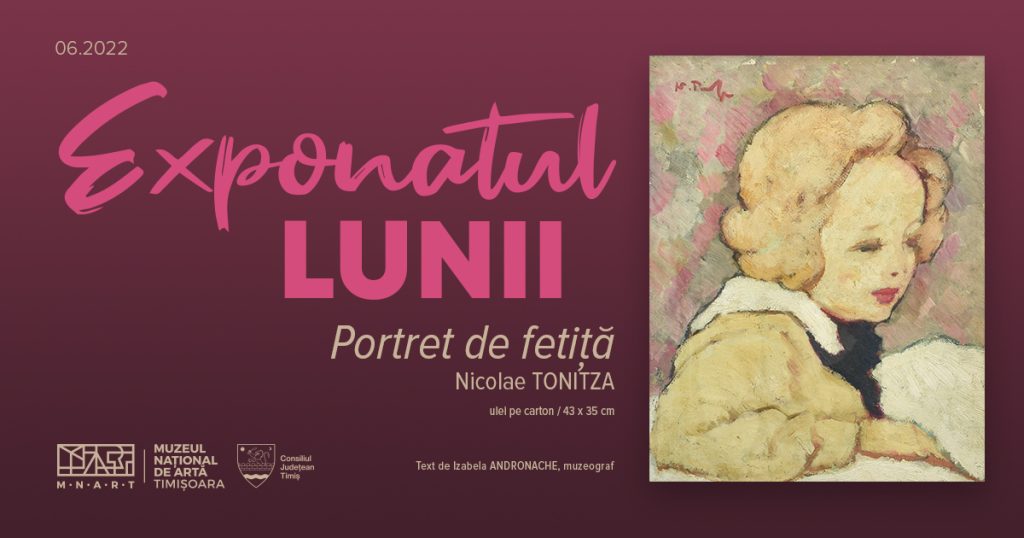
Known as “the painter of children” and of chromatic musicality, Nicolae Tonitza is one of the most beloved Romanian artists. A painter, graphic artist, art critic, writer and teacher – Tonitza’s work reflects the tumultuous life of the inter-war period. Tonitza’s work is complex. It stands out for its vibrant, sunny colors, painterliness (a strong influence of Luchian) and drama, and it manages to introduce new elements into modern Romanian art. Tonitza showed his interest in art at an early age, despite the constant reproaches of his parents. With the help of his uncle, he attends the School of Fine Arts in Iași, and then goes on to study at the Königlich Bayerischen Akademie der Bildenden Künste in Munich, but without completing his studies. He spent some time traveling in Italy and France, where he observed the work of the Impressionists, frequented Pierre Laprade’s studio and studied famous painters. Back home, he completed his studies in Iasi and became a church painter. At the same time, he also concentrated on literature, but often found it difficult to find a balance between the two. The 1920s and 1930s became his most prolific period. With the birth of his three children – Catrina, Peter and Irina – Tonitza was confronted with the “father’s emotion” and the thematic range of his works began to change. The artist uses the children and his granddaughter Nineta as models, observing them at play and sometimes dressing them up in costumes, inventing various characters based on them. Obsessed by the children’s eyes, Tonitza managed to capture the candour, curiosity and sensitivity of his subjects in his large, round eyes, while at the same time leaving his portraits with the mark of a humanist painter and a temperamental father, already aware of the hardships that would befall his children and borrowing early on from his own melancholy and anxiety. Particularly expressive, the eyes come to monopolize the image, treating every other detail as almost insignificant, often only subtly recalling the presence of other facial features with a few simple touches. Portraits of children led the painter to abandon the dark tones and, influenced by the serenity of the little models, he began to turn to bright chromatic harmonies. Tonitza’s paintings continue to fascinate us by their simplicity of form, the almost decorative quality of the background, the luminous palette and, last but not least, the ambivalence of the subjects, who oscillate between calm and restless, between image and life. The portrait of the little girl in the collection of the National Art Museum in Timișoara differs from the artist’s better-known works in the monochrome used (yellow tones, colored grays) which evoke a drowsy atmosphere. The composition lacks the strong accents of red and green often found in Tonitza’s paintings. The girl in semi profile does not make eye contact with the viewer. Her attitude is dreamy, perhaps slightly sad or resigned, like many of the artist’s characters.